
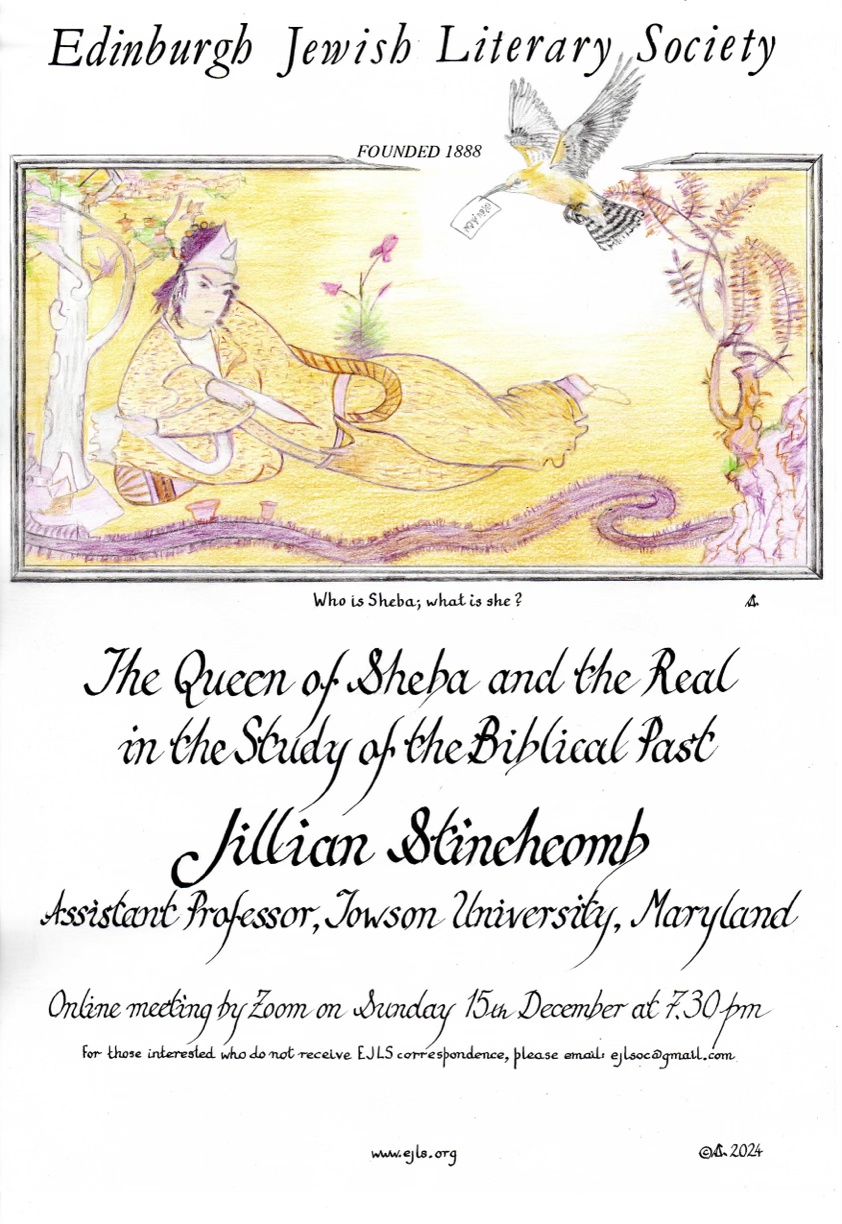
Who was she, really? This question animates a variety of modern treatments of the Queen of Sheba. The Queen of Sheba is famous for visiting Solomon at the height of his rule in an event first described in 1 Kings 10:1-13 and 2 Chronicles 9:1-12. The biblical story is brief and bereft of many details such as her name, her background, or her home country. Perhaps because of this brevity, a rich and sometimes contradictory trove of traditions emerged in Jewish, Christian, and Muslim communities starting especially in the Middle Ages. The Queen of Sheba was sometimes claimed as a foremother to nations, other times presented as a demoness; some saw her as an early convert, while others saw her as a (manageable) threat to traditional values. Modern depictions and discussions of the figure abound. Within this variety, there is a consistent interest in the ‘real’ Queen of Sheba. This talk explores the rhetorical function of invocations of ‘the real’ in discussions of the Queen of Sheba and what this can tell us about our habits of thought concerning the biblical past.
Jillian Stinchcomb is an assistant professor in the Department of Philosophy and Religious Studies and the Department of History at Towson University (Maryland, USA). She teaches classes on the Hebrew Bible, ancient history, and religious studies. She was the Florence Levy Kay Fellow in Hebrew Bible and Mediterranean Cross-Cultural Textual Traditions at Brandeis University from 2020-2022 and a Postdoctoral Fellow in the Interactive Histories, Co-Produced Communities: Judaism, Christianity, and Islamproject from 2022-2024. She earned her PhD in Religious Studies at the University of Pennsylvania in 2020 with her dissertation Remembering the Queen of Sheba in the First Millennium. Her research interests include the literary dynamics of Othering in religious texts, women and power in the ancient world, and collective memory.
 Edinburgh Jewish Literary Society